
OEM vs. ODM for Yoga & Activewear Brands: What Is the Difference?
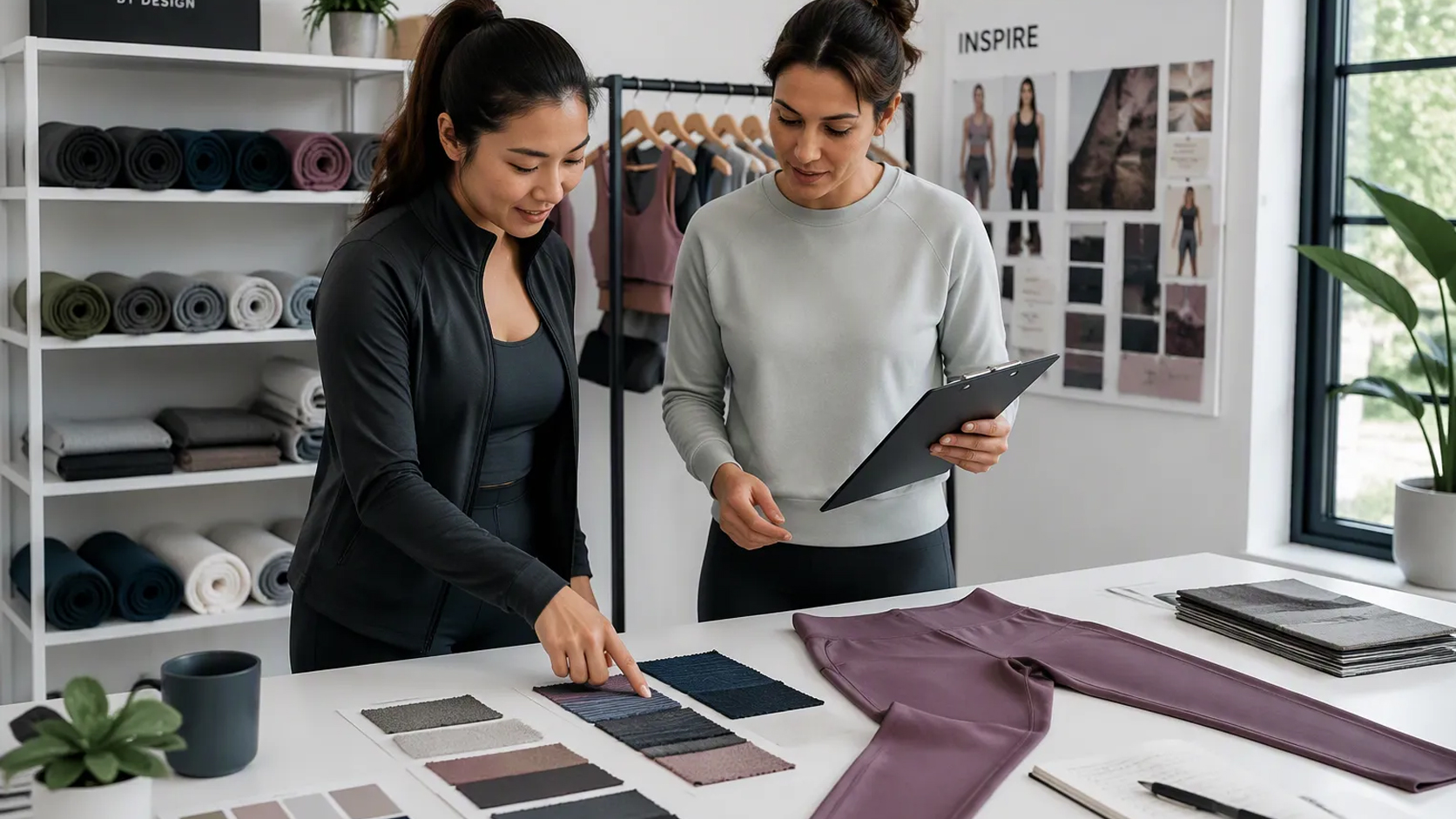
OEM means your brand owns the design and tech packs, and the factory makes the product to your spec. ODM means the factory brings the design, and you change and customize it under your own label. This choice affects design control, cost, speed, exclusivity, and scalability. A startup launching leggings may depend on ODM styles, while an established brand building a signature yoga set often needs OEM. A fitness solution supplier can help with either path.
OEM vs. ODM at a Glance
Who Owns the Design?
Where the design comes from is what sets the two models apart. With OEM, the design belongs to you. You give the factory a full tech pack — measurements, fabric specs, stitching details, color standards — and the factory builds to that spec. With ODM, the manufacturer owns the design. The factory creates styles that are ready for a brand, and you adapt them for your label. Picture a seamless yoga set or a strappy sports bra the factory already engineered: you pick the color, add your logo, and adjust sizing for your market. With OEM leggings, on the other hand, you choose the rise, the waistband construction, and the fabric blend before production begins.
Key Differences
The table below sums up how the two models compare on the factors that matter most to yoga and activewear brands.
|
Factor |
OEM |
ODM |
|---|---|---|
|
Design ownership |
Your brand, through tech packs |
Manufacturer's existing styles |
|
Development process |
You build patterns and samples from scratch |
You pick and adapt proven styles |
|
Cost factors |
Development, tech packs, sampling |
Style adaptation, branding, minor changes |
|
MOQ |
Usually higher, since production runs to your spec |
Often lower, since styles are already set up |
|
Lead time |
Longer; depends on how complete your tech pack is |
Shorter when you adapt existing styles |
|
Customization |
Full control over fit, fabric, construction |
Focused on logos, colors, sizing, trims |
|
Exclusivity |
The design stays yours |
Shared unless you negotiate exclusivity |
The real difference shows up quickly. An ODM sports bra may get to sampling in days because the pattern already exists. An OEM yoga set may take longer, since every panel and seam starts with your tech pack. Neither path is better in every case. Your choice depends on how much control you need and how fast you want to launch. A reliable yoga wear manufacturer will explain both routes clearly, so you can match the model to your product line.
Cost Structure
OEM Cost Drivers
OEM costs start before production begins. You pay for pattern development, tech packs, and sampling rounds. A new yoga set needs graded patterns, fabric testing, and fit samples. Each revision adds cost and time. You also carry the cost of your own design team or a freelance designer. These upfront costs are real, yet they buy you a product no competitor can copy.
Your fabric choices drive unit cost too. A custom blend for leggings or a compression knit for sports bras costs more than a stock fabric. Small details add up as well. Bonded seams, laser-cut edges, and custom trims all raise the per-unit price. You control these decisions, so you control where the money goes.
ODM Cost Drivers
ODM costs center on adaptation, not creation. The factory already developed the style, so you skip pattern making and early sampling. Your spending goes toward color selection, logo placement, size grading, and packaging. A private label activewear line can launch on this basis with far less upfront work.
This model lowers your early development burden. You still pay for customization, and the factory may charge for changes to an existing style. Exclusivity costs extra as well. A stock ODM style may appear under other brands unless you negotiate a dedicated version. OEM offers more differentiation for brands that need a signature look. ODM offers a faster, leaner path for brands that want proven styles with their own branding.
MOQ, Sampling, and Lead Times
Minimum Order Quantities
MOQ ranges are very different from factory to factory, and they also depend on the fabric and style. In general, the industry ties MOQ to how much setup a style needs. OEM yoga wear usually has a higher MOQ. Your custom leggings need their own patterns, fabric dye lots, and a production line set to your spec. ODM activewear often starts lower. The factory already runs that seamless yoga set or sports bra, so your order joins a setup that already exists.
Treat any MOQ you hear as specific to that manufacturer, not as a universal rule. Ask each supplier for its own numbers for each style and each fabric. A stock fabric may allow a smaller run than a custom compression knit. Confirm whether the MOQ applies per color, per size, or per style. That detail changes your launch plan more than the headline number does.
Sampling and Production Timelines
ODM moves faster when you adapt a style that already exists. You review the factory's sample, pick colors, add your logo, and adjust sizing. Sampling can start almost right away because the pattern already exists. OEM timelines depend on your tech pack. A complete pack with measurements, fabric specs, and construction details lets the factory sample without guesswork. Gaps in the pack cause revision rounds, and each round adds time.
Production follows the same logic. An approved ODM style moves to bulk quickly. An OEM yoga set waits on fit approval, fabric confirmation, and pre-production samples. Build your launch calendar around sampling rounds, not just production days. Ask the factory to map out each step in writing, then compare that map across suppliers before you commit.
Design Control and Intellectual Property
Exclusivity and Ownership
With OEM, the design is yours. Your tech packs, patterns, and specs stay your intellectual property. The factory builds from your documents and usually cannot sell that design to anyone else. This protection matters when you create a signature yoga set or leggings with a special waistband. Your investment in development stays yours.
With ODM, the manufacturer owns the base design. You license it or adapt it for your label. Other brands may sell the same style unless you negotiate exclusivity. Ask your supplier directly if a style is exclusive to you, how long that exclusivity lasts, and which markets it covers. Some factories offer a dedicated version of a popular sports bra or seamless set for an extra fee. Get these terms in writing before you commit to a launch.
Customization Options
Both models let you shape the final product, but the depth is different. OEM gives you full control over fabric selection, construction, and fit. You can specify a compression knit for support, a buttery-soft blend for leggings, or bonded seams for a smooth finish.
ODM customization focuses on the details that carry your brand. You choose colors, place your logo, adjust the size range for your market, and design the packaging. Fabric upgrades are often possible on an existing style. Confirm the scope early, because each change may affect cost and timing. A clear talk with your yoga wear manufacturer about what you can change, and what stays fixed, prevents surprises later.
Which Model Fits Your Brand?
Both models are real ways to reach the market. The right fit depends on your resources, your timeline, and how much control you want over the final product. Use the lists below to match your situation to a model.
Choose OEM If…
- You have a clear design vision and want full control over fit, fabric, and construction. A signature yoga set with a custom waistband or a leggings line with a specific compression knit fits here.
- You can invest in development. Pattern making, tech packs, and sampling rounds come before production, and that work carries a real cost.
- You want a product competitors cannot copy. OEM keeps the design yours, which protects your investment in custom yoga clothing.
- You have product experience or a design team. A complete tech pack cuts down revision rounds and keeps your timeline on track.
- You plan to grow a line that stands out. Higher MOQs suit brands with steady demand and a clear market position.
- You want to build a long-term brand identity. A yoga wear manufacturer that builds to your spec helps you own your look.
Choose ODM If…
- You want to launch quickly. Adapting an existing seamless set or sports bra shortens sampling and gets you to bulk sooner.
- Your budget is tight at the start. ODM activewear lowers early development work, so your spending goes toward branding and packaging.
- You are new to manufacturing. Proven styles take away the guesswork of building patterns from scratch.
- You want lower order volumes. ODM styles often start at smaller MOQs because the factory already runs them.
- You need private label activewear with your logo, colors, and sizing. ODM customization covers these details well.
- You want to test a market before committing to full development. A small ODM run shows you what sells.
A fitness solution supplier can walk you through both paths and help you weigh the trade-offs. Neither model wins by default. Your budget, experience, timeline, and differentiation goals decide the fit. A fitness solution supplier with experience in yoga and activewear will match the model to your product line, not the other way around.
The Hybrid Approach and a Fitness Solution Supplier's Role
Blending OEM and ODM
You don't have to choose one model for your whole business. Many brands use both across their product lines. You might launch a signature leggings line through OEM, where your tech pack sets the fit and fabric. At the same time, you can stock sports bras and seamless yoga sets from ODM styles with your logo and colors. This mix lets you protect your hero products and still move fast on supporting items.
A hybrid plan also spreads your risk. Your OEM pieces build long-term brand identity. Your ODM pieces fill gaps in the range and test demand with less upfront work. A fitness solution supplier can manage both tracks under one account, which keeps quality and timelines consistent.
Vetting a Manufacturer
Check four things before you commit. First, review the tech pack process: does the factory ask detailed questions about construction and fabric? Second, request samples and judge stitch quality, fit, and fabric hand-feel. Third, confirm capacity for your volumes and season peaks. Fourth, agree in writing on what you can customize, from logos to packaging.
JUNEX works as a one-stop fitness solution supplier for brands that want both paths. The company offers OEM and ODM services across activewear, yoga mats, studio props, and fitness accessories, with 800+ products, 45 million annual capacity, and 100+ global clients. Explore the Custom Service and Activewear & Apparel pages to see the scope.
Think about who owns the design, your budget, how fast you need to launch, exclusivity, and order size before you pick. Pick OEM when you need a one-of-a-kind product that you fully control. Pick ODM when you want styles that are already proven and a quicker launch. JUNEX is a fitness solution supplier that backs both models. Check out our Custom Service and Activewear & Apparel pages today.
FAQ
Can you switch from ODM to OEM later?
Yes. Many brands launch with ODM styles, learn what sells, then move hero products to OEM. Your sales data guides the tech pack you build next.
How do you secure exclusivity on an ODM style?
Ask your manufacturer in writing. Confirm whether the style is exclusive to you, how long that lasts, and which markets it covers. Some factories offer a dedicated version for a fee.
What should you prepare before contacting a yoga wear manufacturer?
Bring your product list, target quantities, fabric preferences, and branding needs. For OEM, add a tech pack. For ODM, note which existing styles you want to adapt.